

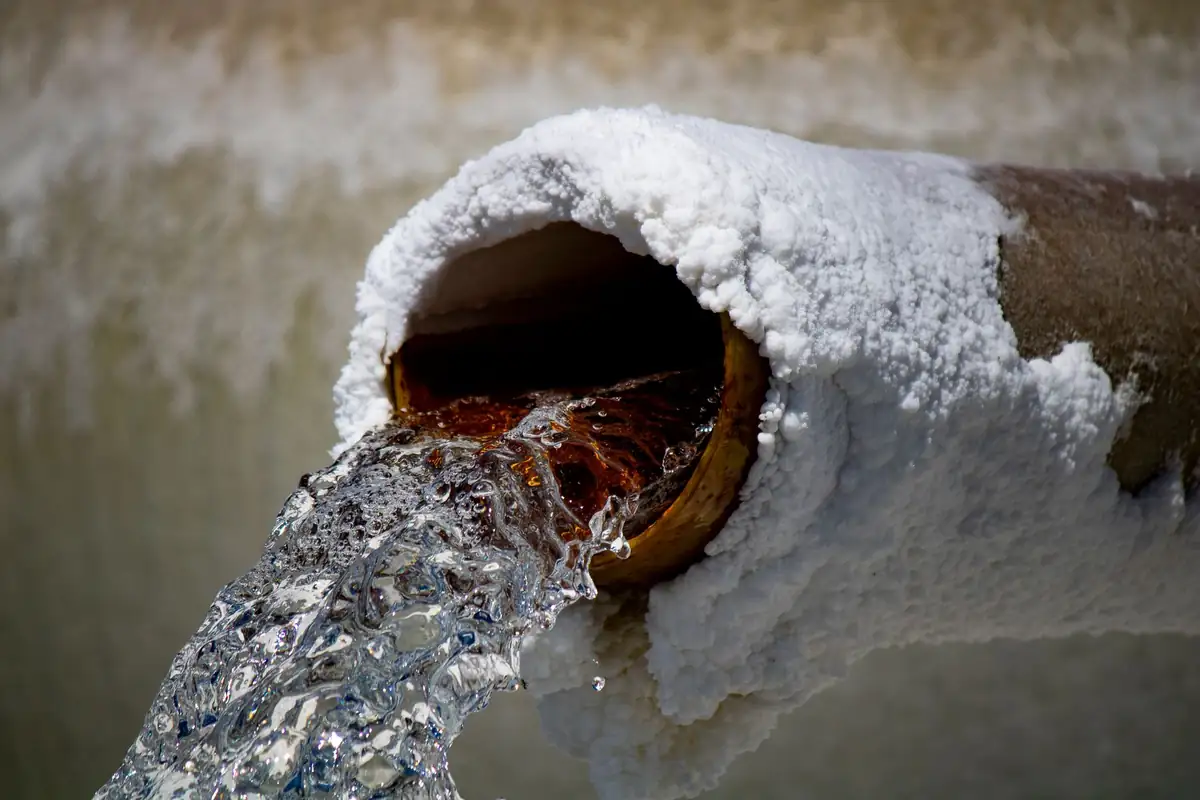
There is a white crust around the base of the kitchen faucet that comes back a week after you scrub it. The glasses come out of the dishwasher cloudy. The showerhead sprays sideways. Somebody at work says the fix is a softener, and now you’re wondering whether your house actually needs one or whether that’s a sales pitch.
The short version: hardness is a number, your water provider probably already publishes yours, and a softener solves a specific list of problems. If those problems are the ones you have, it’s worth pricing. If they aren’t, it won’t fix them.
What “hard” means, and where the line is
Hard water is water carrying dissolved calcium and magnesium. The U.S. Geological Survey’s water hardness page sets the scale most labs and utilities use, measured in milligrams per liter as calcium carbonate: 0 to 60 is soft, 61 to 120 is moderately hard, 121 to 180 is hard, and above 180 is very hard. Softener sizing charts use grains per gallon instead; one grain is about 17.1 milligrams per liter, so 180 mg/L is a little over 10 grains.
The USGS also describes what those minerals do once the water is heated: “solid deposits of calcium carbonate can form. This scale can reduce the life of equipment, raise the costs of heating the water, lower the efficiency of electric water heaters, and clog pipes.” That sentence is the whole case for a softener, and it’s why the first place hard water shows up as money is the water heater.
Find your own number before you buy anything
Three ways, cheapest first.
Your annual water quality report. Every community water system has to send one out each year, and the EPA’s consumer page gives the deadline: “Reports must be sent by your water supplier each year by July 1.” So if you’re reading this in late June, yours is either in the mail or already posted on your provider’s website. Hardness isn’t a regulated contaminant, so it’s not always on the report, but many Texas systems list it anyway under secondary or unregulated constituents. Look for “total hardness” or “hardness as CaCO3.”
Ask the utility. If the report doesn’t list it, the office that bills you can usually tell you. Around Magnolia and the north side of the county that may be a municipal utility district, a water supply corporation, or a city, and the answer changes from one to the next because they draw from different wells and sources. Don’t assume your number matches the neighbor’s if you’re on different systems.
A test strip. A hardness strip from a hardware store gives a rough reading in a minute. It isn’t lab-grade, but it will tell you if the house is sitting at 3 grains or 15. If you’re on a private well, this is where you start, since nobody sends you a report.
What a softener does
A softener is an ion-exchange tank. Water passes through a bed of resin beads that hold sodium (or potassium). The beads grab the calcium and magnesium and release sodium in their place. What comes out the other side still has minerals in it; they’re just minerals that don’t form scale or soap scum.
Every few days the resin fills up and the unit regenerates: it flushes the beads with brine from the salt tank, sends the rinse water down a drain, and is ready again. That’s why a softener needs three things at its location: a spot on the main line where it can treat the whole house, a drain it can discharge to, and a power outlet for the control head.
Two installation details matter more than the brand. The unit goes in ahead of the water heater, because the heater is the appliance that suffers most. And the outdoor hose bibs are usually left on hard water, on purpose, so the lawn and the garden aren’t being watered with softened water and you’re not burning salt on the sprinklers.
What a softener does not do
This is where expectations go wrong.
- It doesn’t filter. Chlorine or chloramine taste, sediment, iron staining and anything you would call “purity” are filtration jobs. Some homes want both a softener and a filter; a softener alone won’t change how the water tastes.
- It adds a little sodium. The amount tracks how hard the water was to begin with. Households that would rather not have that use potassium chloride pellets instead of salt; they cost more per bag and do the same job.
- It won’t undo existing scale. A water heater that has spent ten years building up mineral won’t shed it because the incoming water changed. It will stop getting worse.
- A “salt-free conditioner” isn’t a softener. Those units change how scale crystallizes; they don’t remove calcium and magnesium. If your complaint is spotting, soap scum and dry skin, a conditioner won’t address it, because the minerals are still in the water.
When it is worth pricing
If you find yourself replacing water heater elements, descaling a tankless unit every year, or rebuilding faucet cartridges that clogged with grit, and your number sits in the hard or very hard range, the softener is protecting a list of appliances that cost more than it does. If your number is in the soft or moderately hard band and the water heater has been fine for a decade, there isn’t much for a softener to fix.
If you do nothing, the water heater keeps building scale at whatever rate your hardness sets. That’s the honest default.
Who is allowed to install one in Texas
Worth knowing, because it decides who you call. The state’s Plumbing License Law carves water treatment out of the plumbing license: Occupations Code Section 1301.053 exempts “water treatment installations, exchanges, services, or repairs” from the license requirement. Water treatment is instead licensed on its own by the Texas Commission on Environmental Quality, and TCEQ’s Water Treatment Specialist page lists plumbers among the people exempt from needing that separate license. So a licensed plumber can do the whole job. Where a plumber is specifically the right call is when the install means rerouting the main line, adding a loop, or moving the water heater tie-in, because that piping is plumbing under Section 1301.002, no matter who owns the softener.
How we handle it
Water softeners and whole-home filtration are on our services page: we size the unit to your hardness number and how much water the house actually uses, install it, and tune it. Every install carries the one-year workmanship warranty described there, and the quote comes before any pipe gets cut.
If you have pulled your number, or you would like us to test it on the visit, call (281) 786-3695. Tell us who your water provider is; that’s usually enough to know what we’re dealing with before the truck leaves.