

You want a gas range instead of the electric one that came with the house. Or a patio grill that never runs out of propane. Or a standby generator, because the last storm took the power for three days. Every one of those starts with the same question: what does running a gas line actually involve?
The short version: in Texas, gas piping is plumbing, it is licensed work, and a proper job has three parts you should expect to see: the line gets sized for everything on it, it gets pressure-tested, and it gets permitted and inspected. If a quote skips any of those, it is not the same job.
Why it is a plumber, and why it is licensed
Texas’s Plumbing License Law spells this out. Under Texas Occupations Code Section 1301.002, “plumbing” includes piping used to “supply, distribute, circulate, or recirculate water, other liquid, or gas,” along with the piping outside a building that connects it to a gas supply on the premises. Gas lines sit inside the same license that covers your water and drain lines.
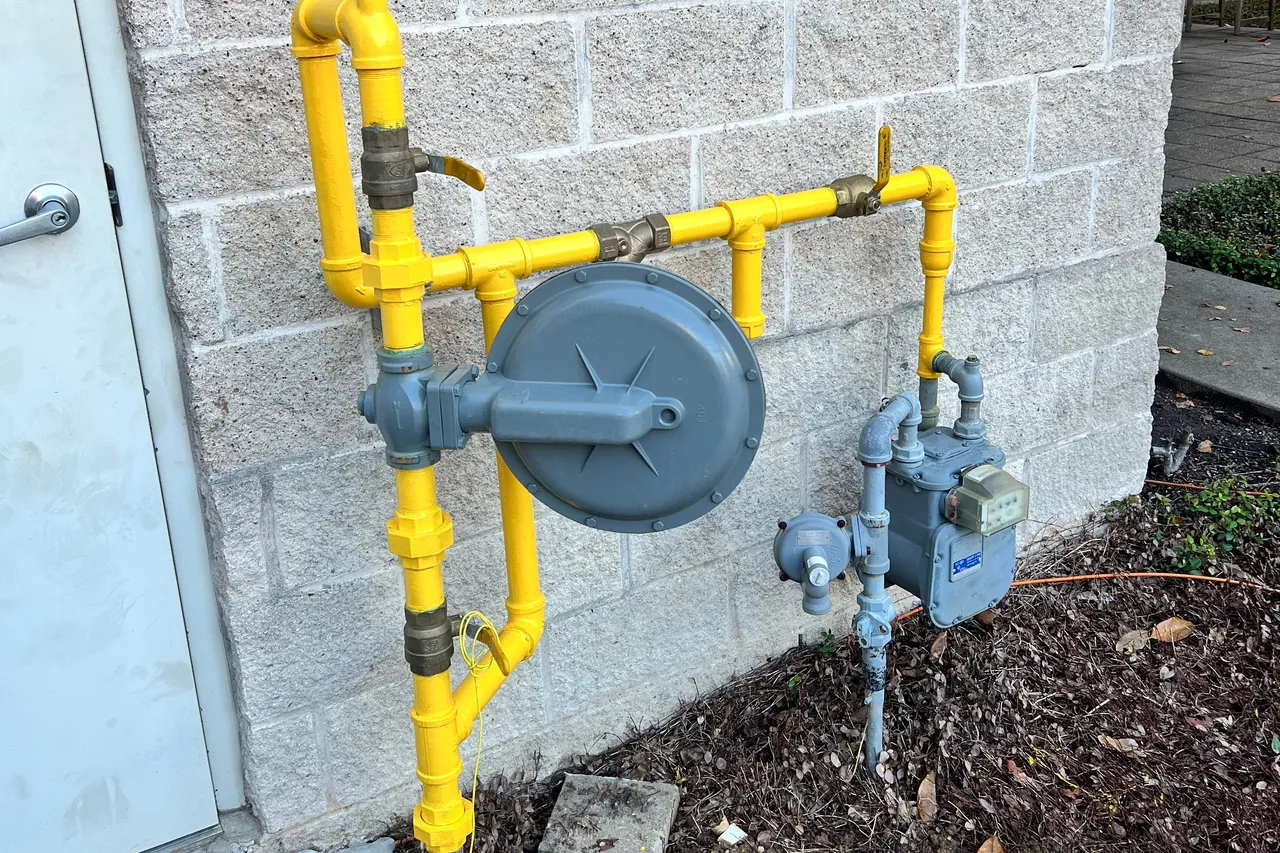
A lot of people assume gas is the utility’s problem. The utility’s responsibility typically ends at your meter. Everything past it, from the first fitting to the shutoff behind the range, is the homeowner’s.
What “sized properly” means
Gas piping is sized, not guessed. Every appliance has a rated demand in BTU per hour, printed on its data plate. A plumber adds up everything the line will feed, measures how far the gas has to travel, and picks a pipe size that delivers the full load to the farthest appliance with everything running at once.
Three things people miss:
The new appliance is added to what is already there. A range, a furnace, a water heater and a dryer may all share one line from the meter. A new outdoor kitchen goes on top of that total.
Some appliances are big. A whole-house tankless heater commonly wants 150,000 to 199,000 BTU per hour, as we covered in our tank versus tankless guide. A standby generator carries its own full-load rating from the manufacturer. Either one can outrun a line that was fine for a range and a dryer.
The meter can be the limit. The house’s meter and regulator have a capacity of their own. If the new total is more than the meter can pass, pipe size inside the house is not the fix, and the utility gets involved. A plumber who sizes the job should tell you this before the first fitting goes on, not after.
Black iron or CSST
Two materials do most of the residential work. Black iron is threaded steel pipe, rigid, and the usual choice for long straight runs and anything outdoors. Corrugated stainless steel tubing, or CSST, is a flexible yellow or black tube that snakes through framing with fewer fittings. We install both; the route and the exposure decide which. One CSST detail: the manufacturers’ instructions call for it to be bonded to the home’s electrical grounding system for lightning protection. That is part of a correct install, not an add-on.
The leak test is something you can watch
Before a new line is connected to anything, it is capped, pressurized with air, and left with a gauge on it. The pressure and how long it has to hold are set by the code your city or county has adopted. If the needle moves, something is leaking, and the line does not get gas until it is found and fixed.
We do this on every gas job, and the inspector signs off on it. You are welcome to look at the gauge yourself.
Permits: city or county, but always one of them
Gas piping gets a permit and an inspection. Inside a city, that is the city’s building department. Outside city limits, in unincorporated Montgomery or Harris County, it runs through the county. The inspection is a second set of eyes on the sizing and the test, and it is the record that the work was done to code if you ever sell the house or file an insurance claim.
If any part of the line goes underground, as most generator and outdoor-kitchen runs do, there is one more step. An 811 locate request has to go in at least two business days before digging, so the utilities can mark what is already buried. The Railroad Commission of Texas spells it out in its safe-digging guidance, and the request is filed through Texas811. We handle that as part of the job, and it is why an underground run is never a same-day call.
Generators: start the gas side early
A standby generator is a gas-line job first and an electrical job second. The unit needs its own supply sized for its full-load consumption, usually a buried run from the meter, plus a permit and a leak test before it is commissioned. Generators tend to get decided on in the middle of hurricane season, after a storm has made the case. The gas side is the part that takes scheduling, so start it early.
What to do if you ever smell gas
Natural gas has a smell added to it on purpose, usually described as rotten eggs or sulfur. The Houston-area gas utility’s guidance is short: leave the area immediately, on foot; do not use your phone, flip a switch or start a car; and once you are a safe distance away, call 911 and the utility. Never try to find or fix the leak yourself. A plumber is the call after the utility has made the house safe, to repair or replace whatever failed.
What to have ready when you call
- What the line is for, and the make and model if you have picked the appliance. The BTU rating is on the data plate.
- Where it needs to go, roughly: across a yard, under a slab, through an attic.
- What else is on gas now. Range, furnace, water heater, dryer, pool heater. That is the load the new line joins.
With those three, we can usually tell you on the phone whether this is a branch off the existing line or a job that needs the meter looked at.
How we handle it
Gas line repair and installation is on our services page: new ranges, tankless conversions, generator hookups and outdoor-kitchen runs, in black iron or CSST, sized, leak-tested, and permitted with the city or county. We quote before we cut, and the quote is the number you pay. If the meter or the existing line makes the job bigger than you expected, you hear that up front.
If you are planning a gas range, a grill line, a generator or a tankless swap in Magnolia, Pinehurst, Tomball, The Woodlands or anywhere in the Houston area, call (281) 786-3695. Have the appliance’s data plate handy. It is the first thing we will ask about.